

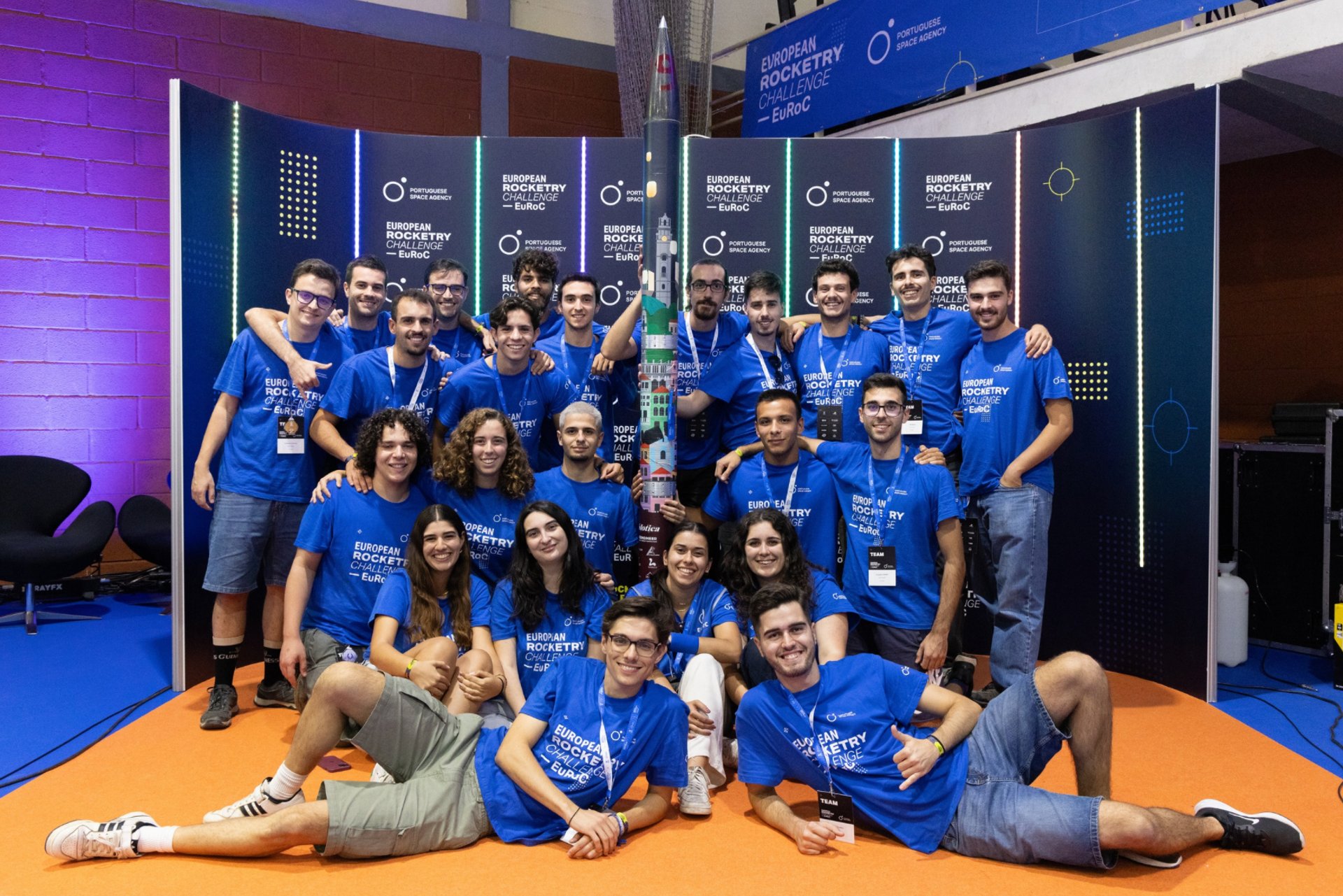
SPATI-II

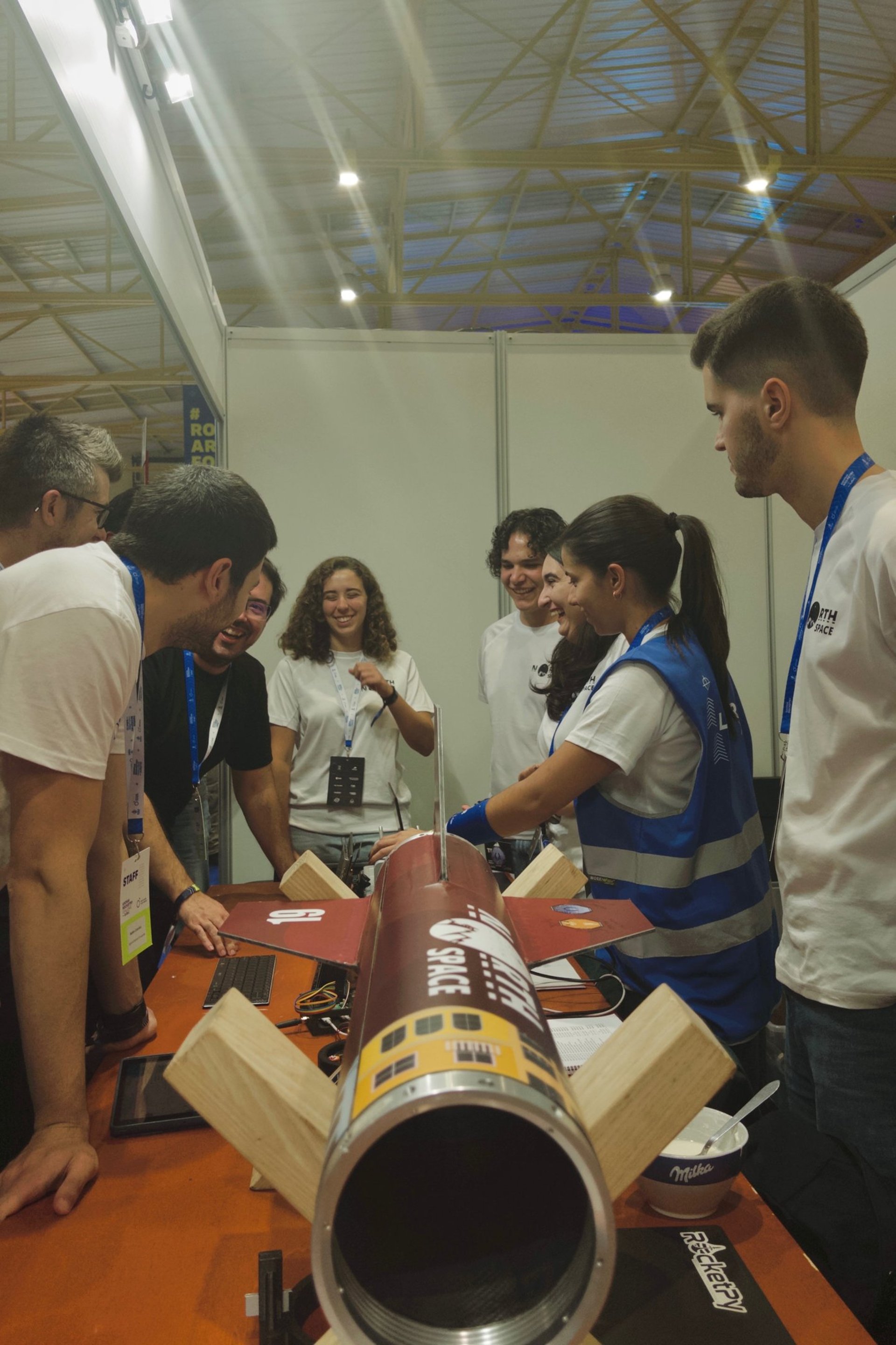
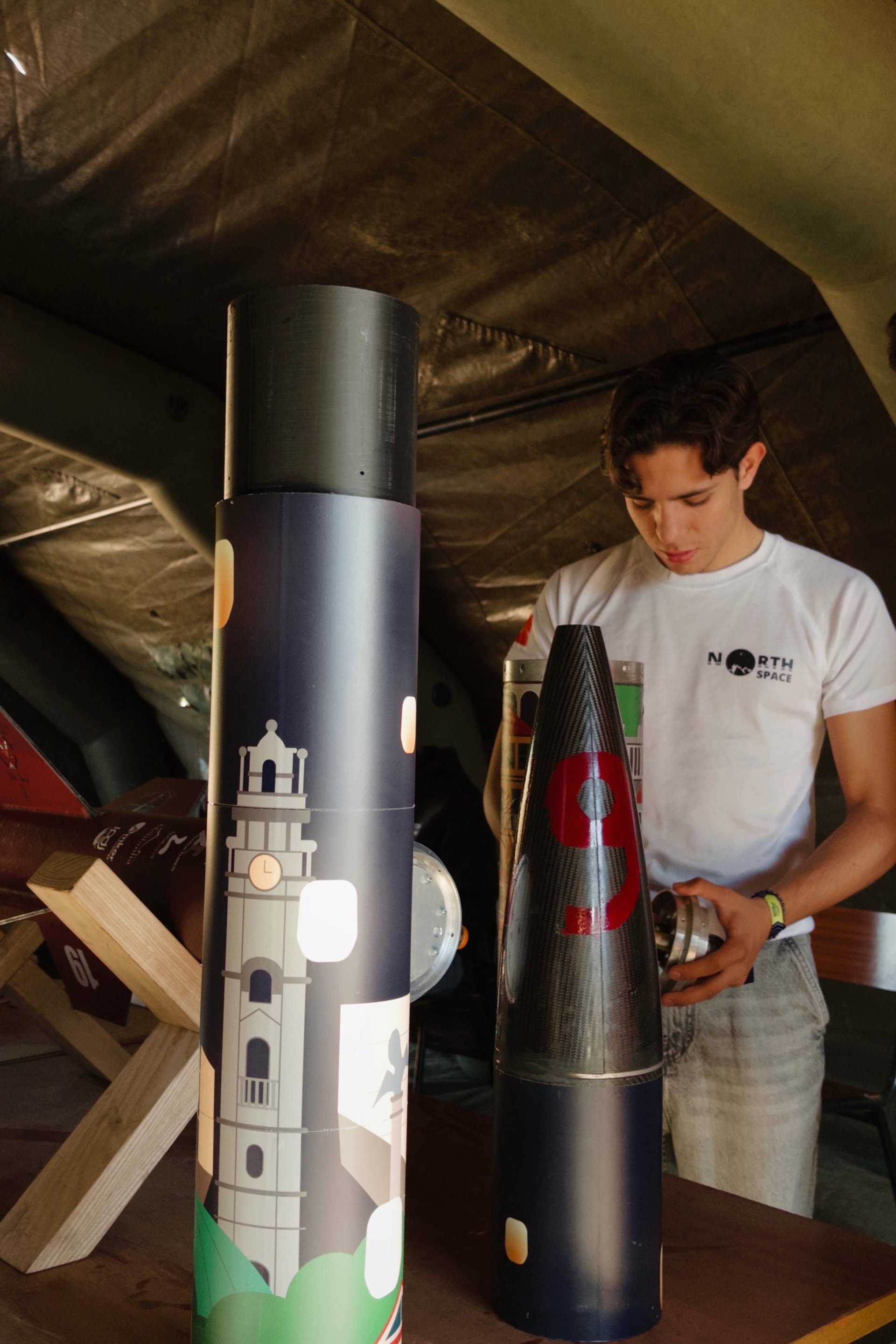
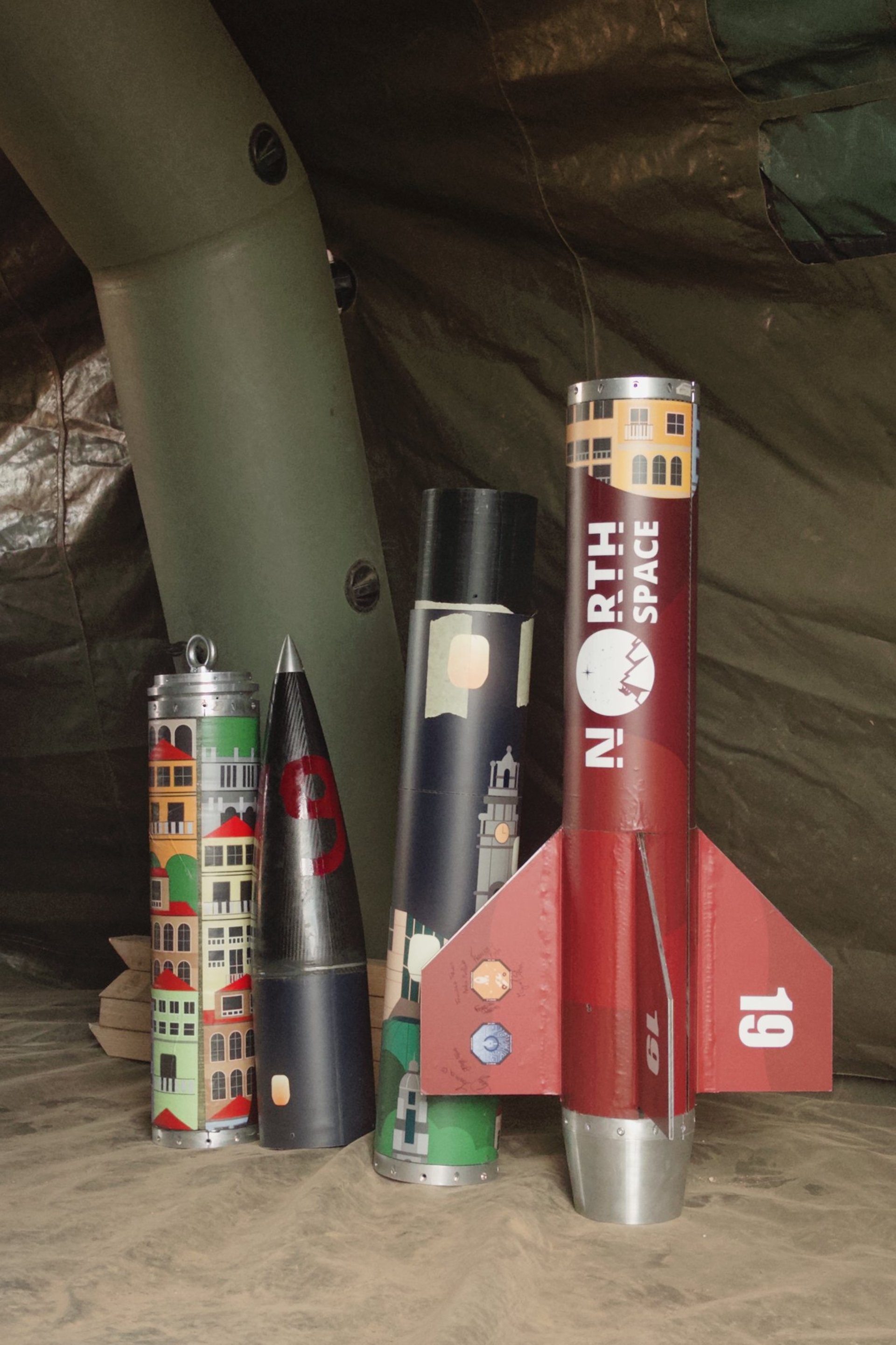
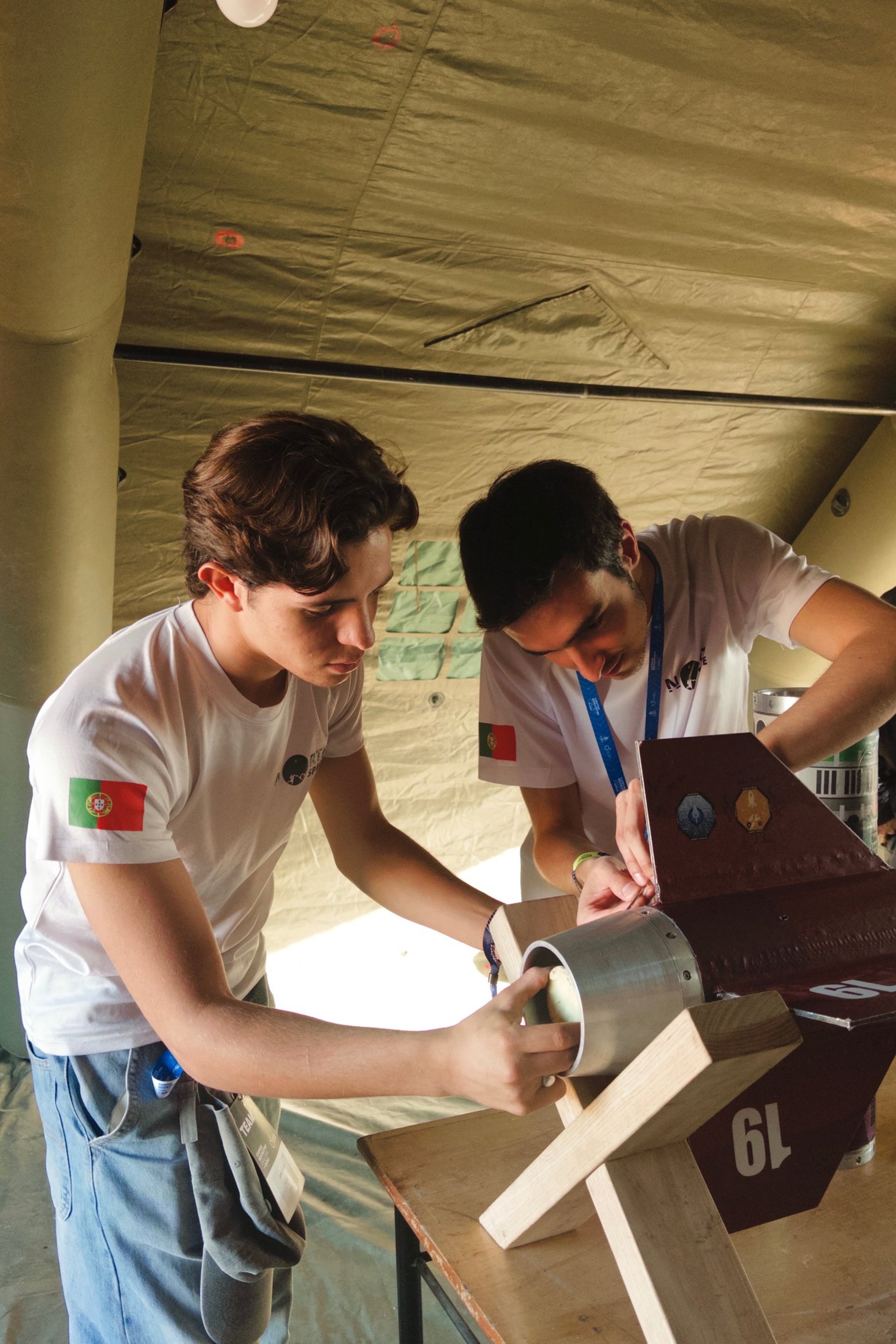
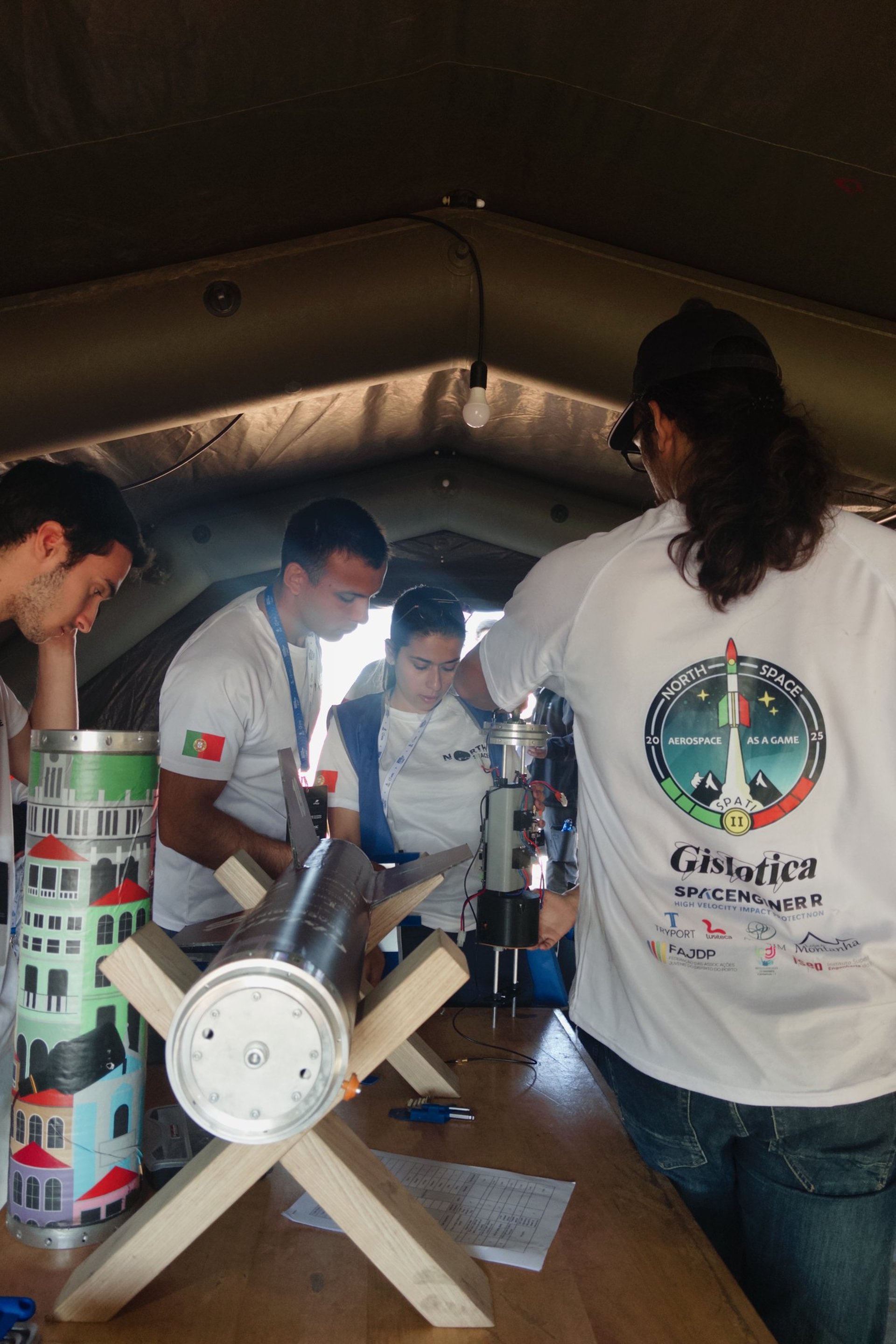
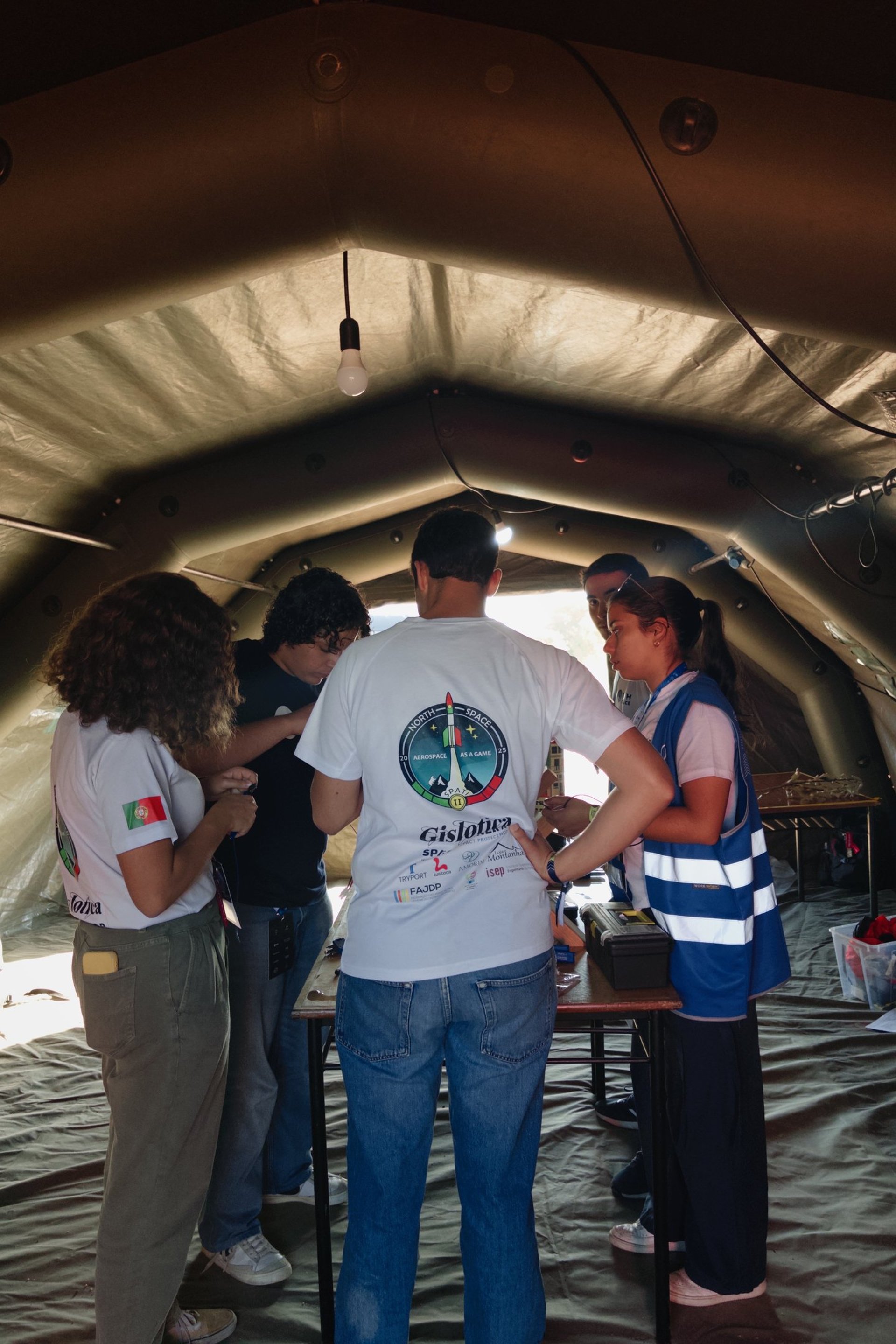
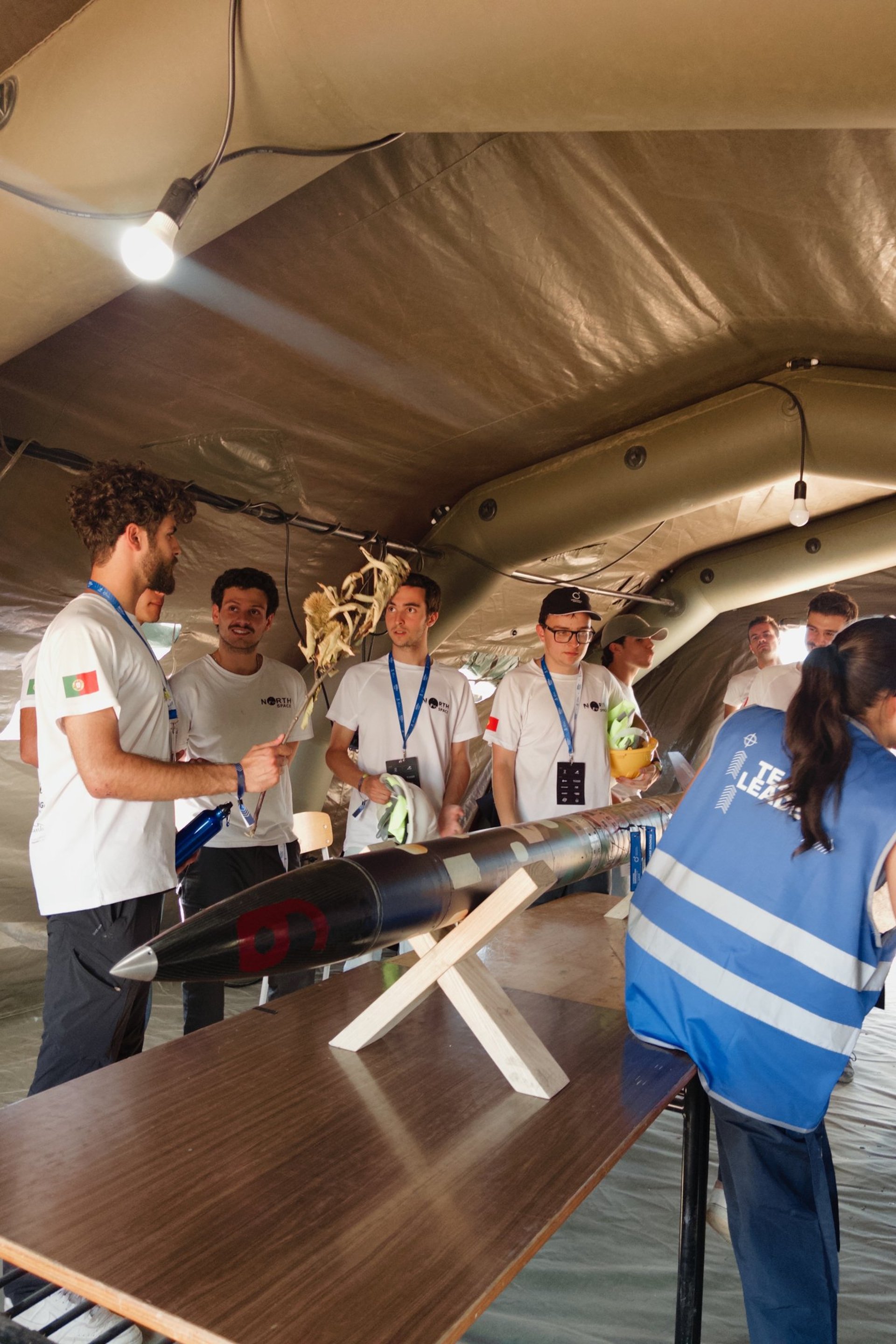
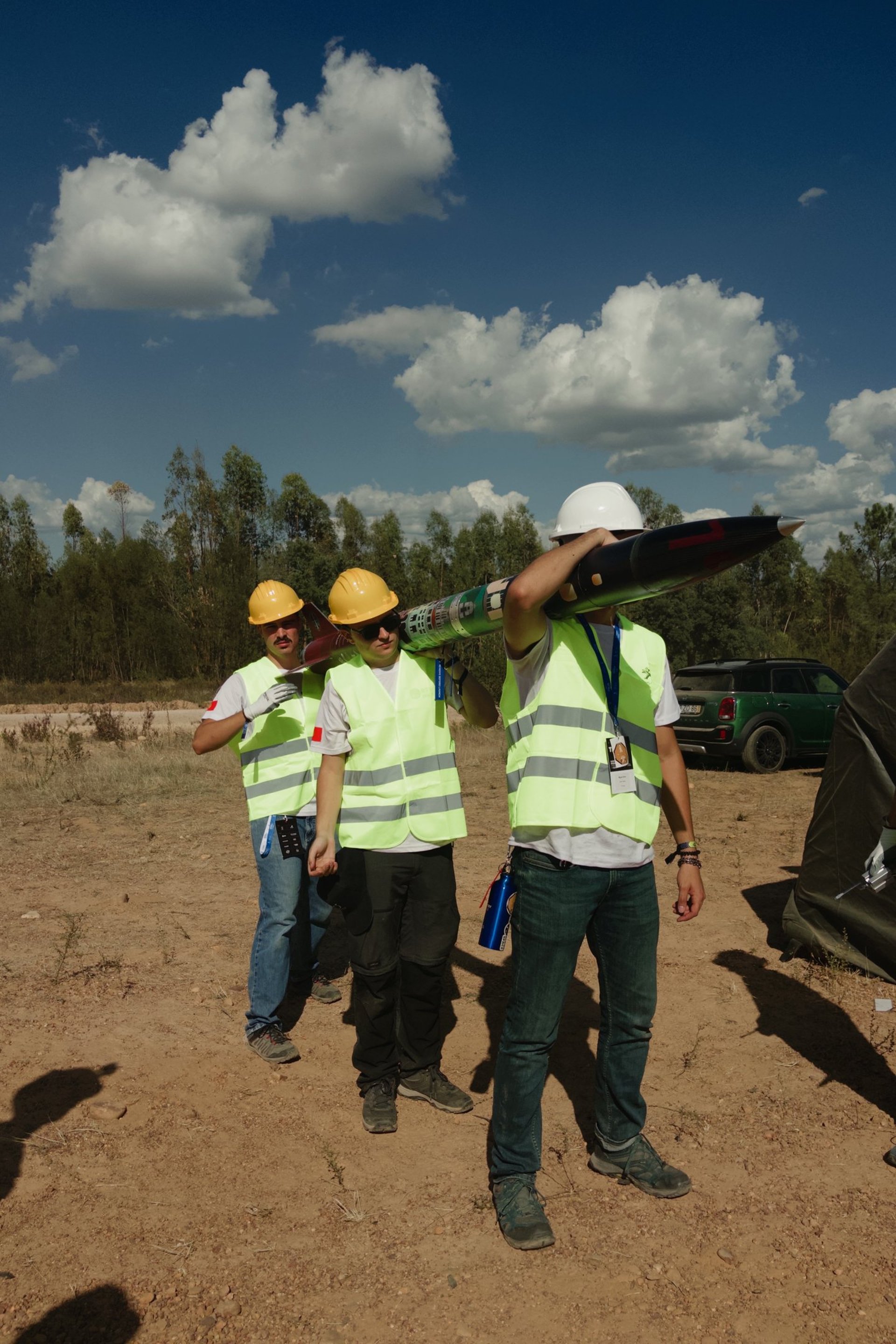
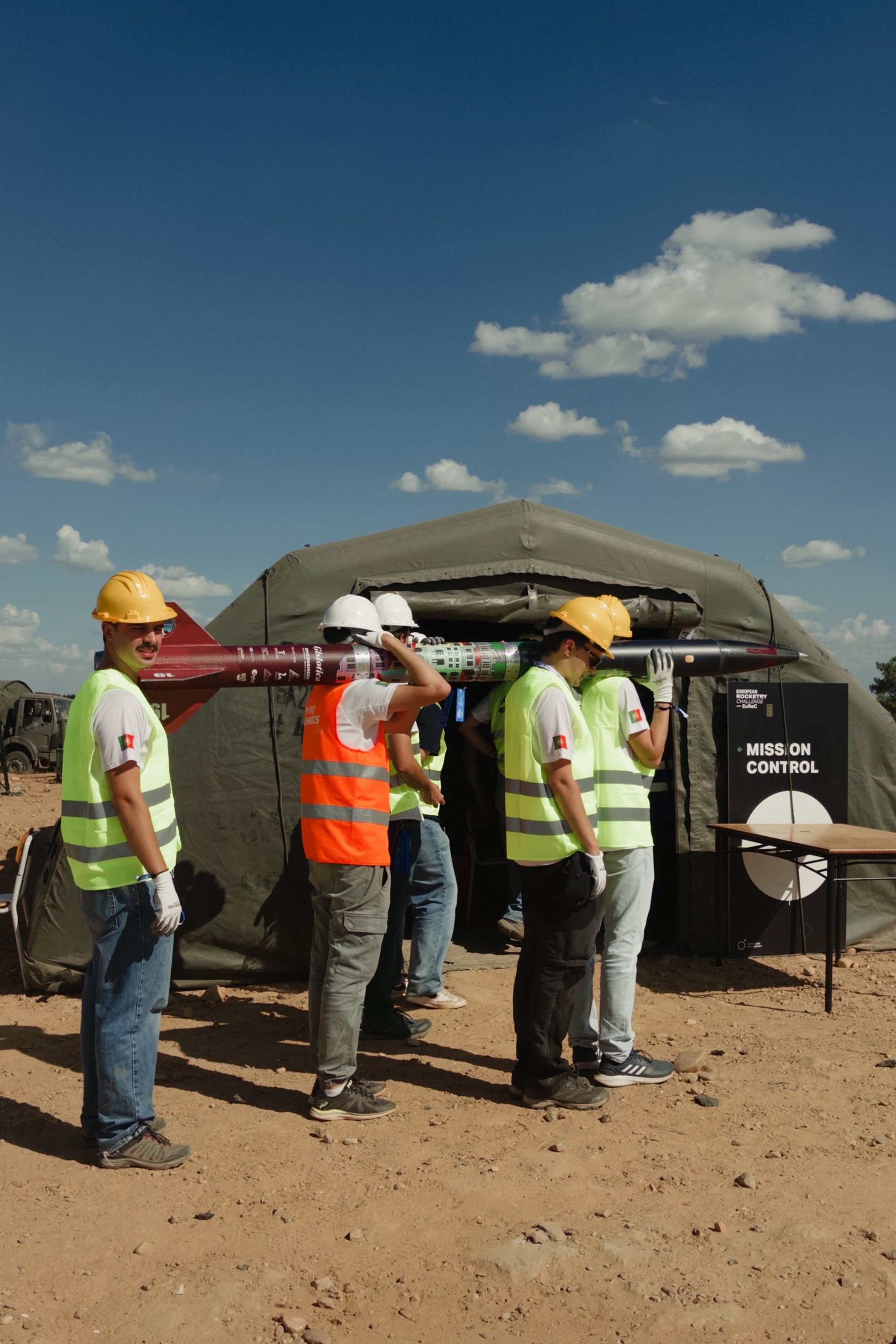
SPATI-II is North Space’s second rocketry project, designed to build upon the achievements of its predecessor. The project’s primary objective is to reach an altitude of 3000 meters using a fully SRAD solid-propellant motor, marking a significant leap in the team's engineering capabilities.
SPATI-II introduces advanced features such as a dual-redundant avionics system and an innovative cold-gas recovery system for reliable deployment. Beyond the flight itself, the mission carries a scientific payload to study non-Newtonian fluid dynamics under high acceleration, furthering North Space's commitment to combining rigorous engineering challenges with experimental scientific research.
500 m
24.9 kg
140 mm
Diameter
Weight
Apogee
2642 mm
Length
Motor: SRAD Viriathus
Fuel: SRAD Rocket Candy
Payload: Non-Newtonian vs Newtonian fluids
Flight Computer: SRAD Icarus
Ground Station: COTS - CATS Computer
Nosecone Ejection System: CO2 System
Main Parachute: SRAD Annular
Drogue Parachute: SRAD Disk-gap-band
Fibers: SRAD Fiberglass and Carbon Fiber
Nosecone: Von Kármán
Characteristics

Simulations: Trajectory using RocketPy and CFD
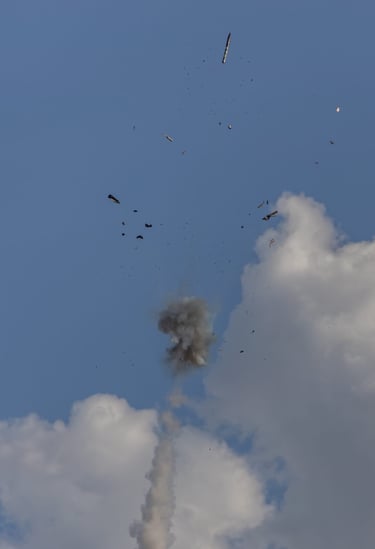
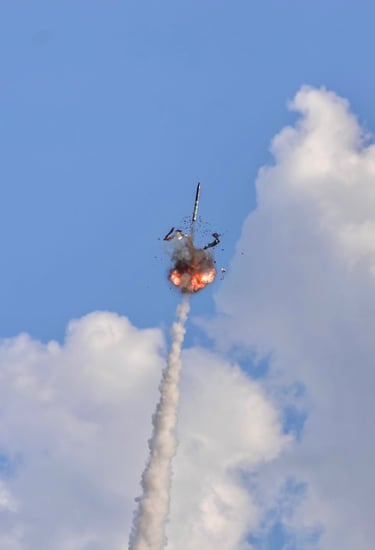
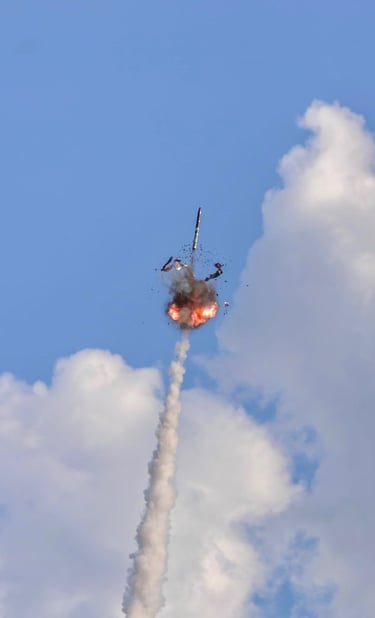
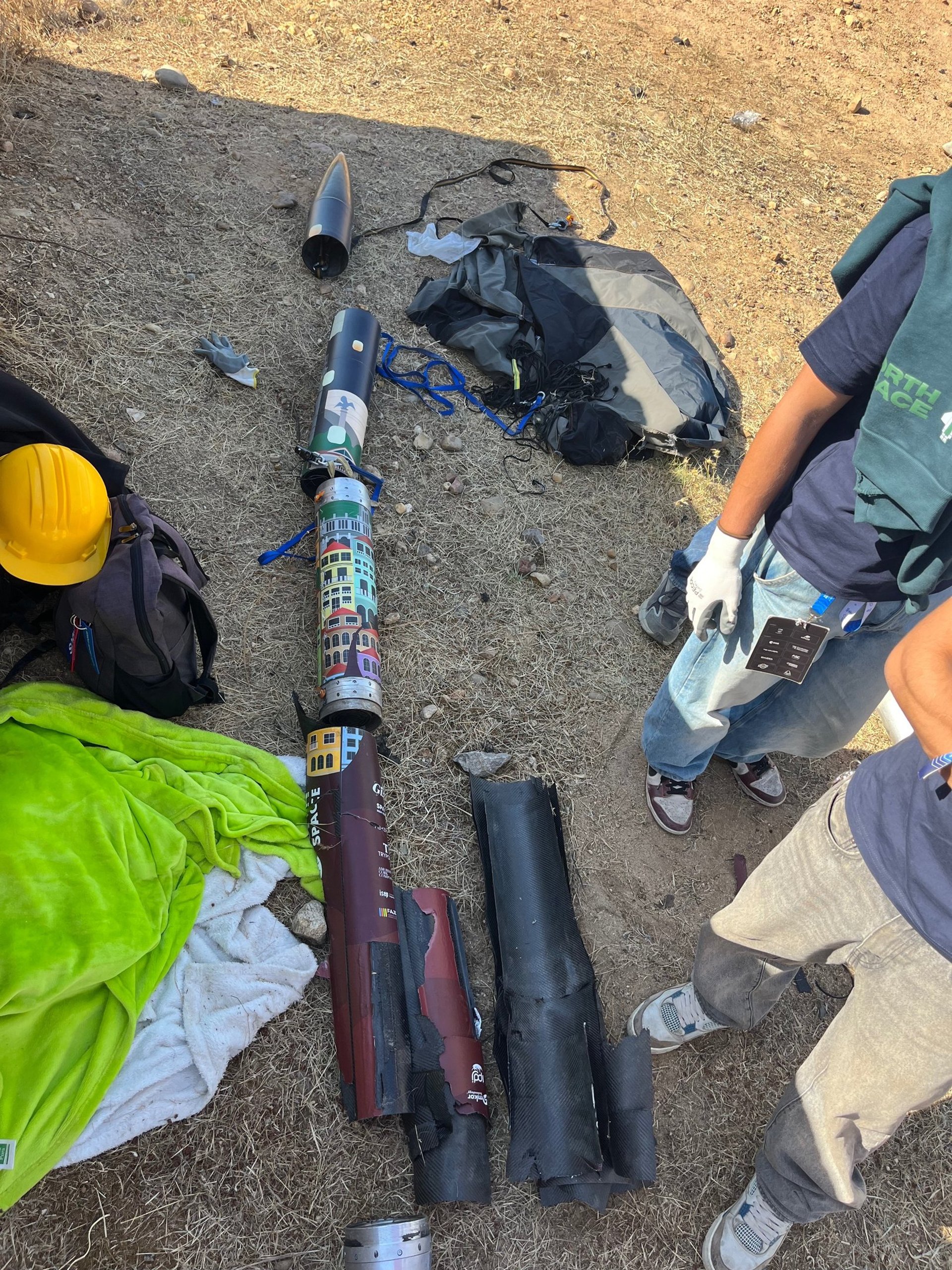
Launched at EuRoC 2025
Flight
Payload
Responsible for the scientific mission studying non-Newtonian fluid dynamics under high acceleration. They designed a custom CanSat-like module equipped with sensors to compare the in-flight behavior of a cornstarch mixture against a control fluid.
Avionics
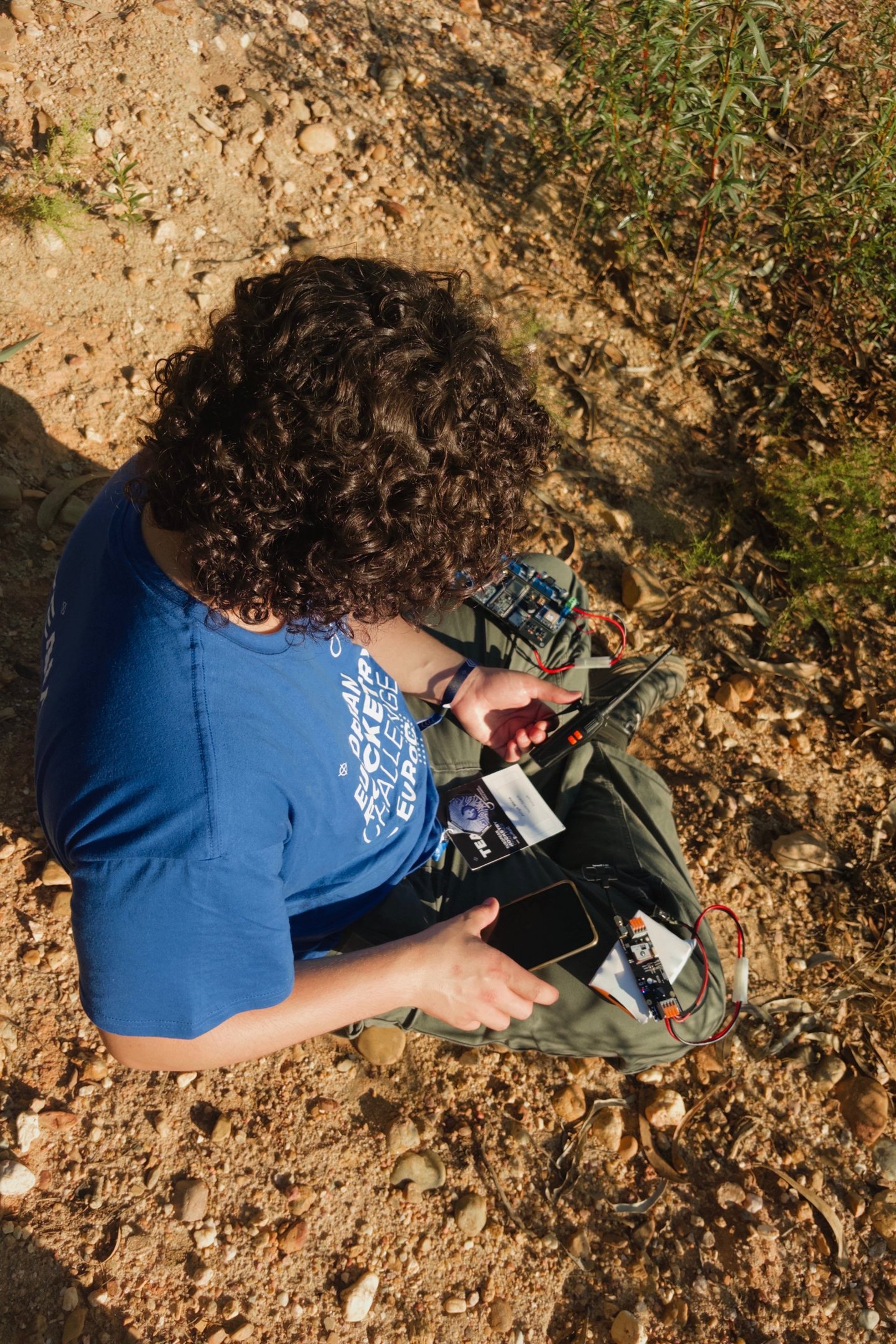
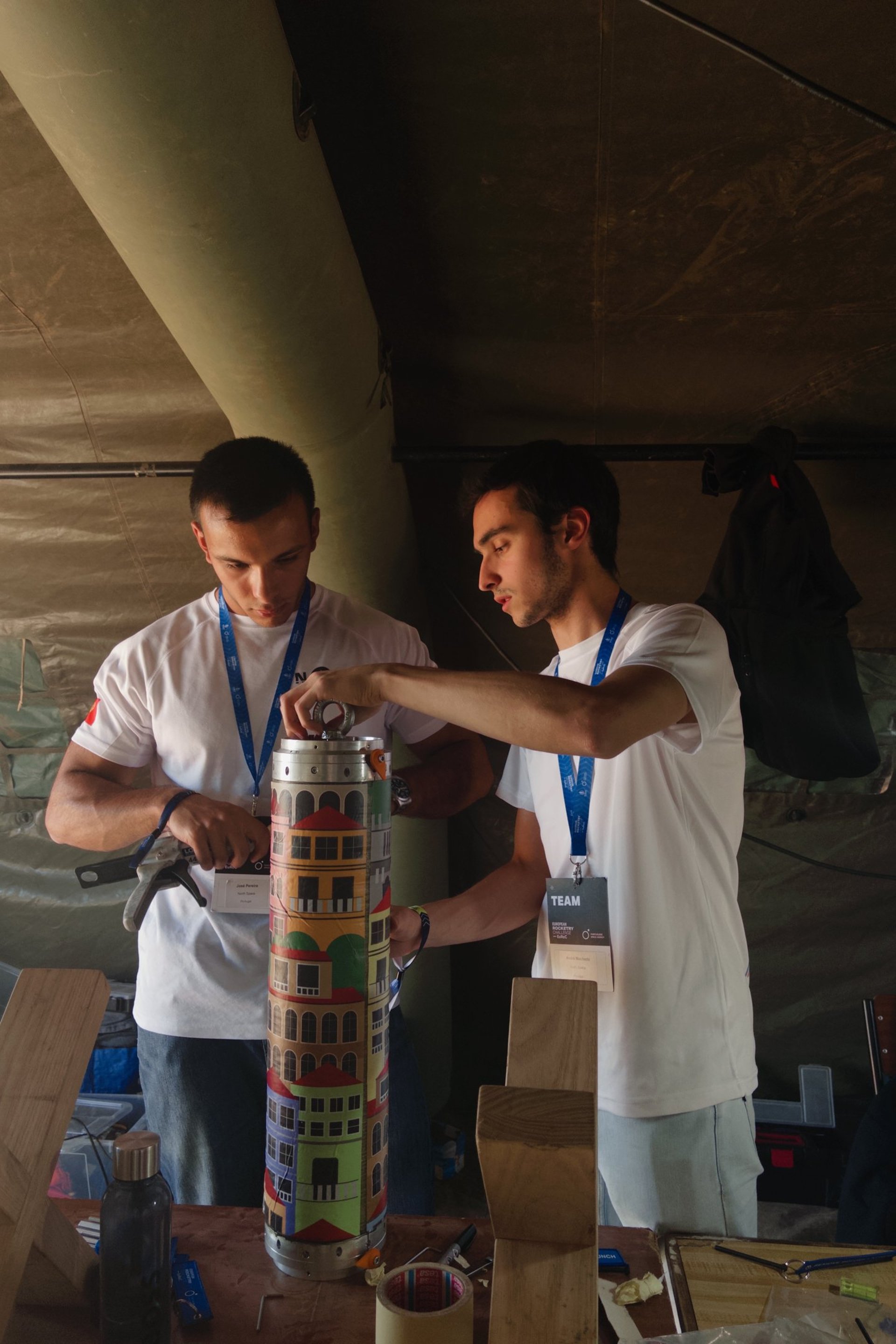
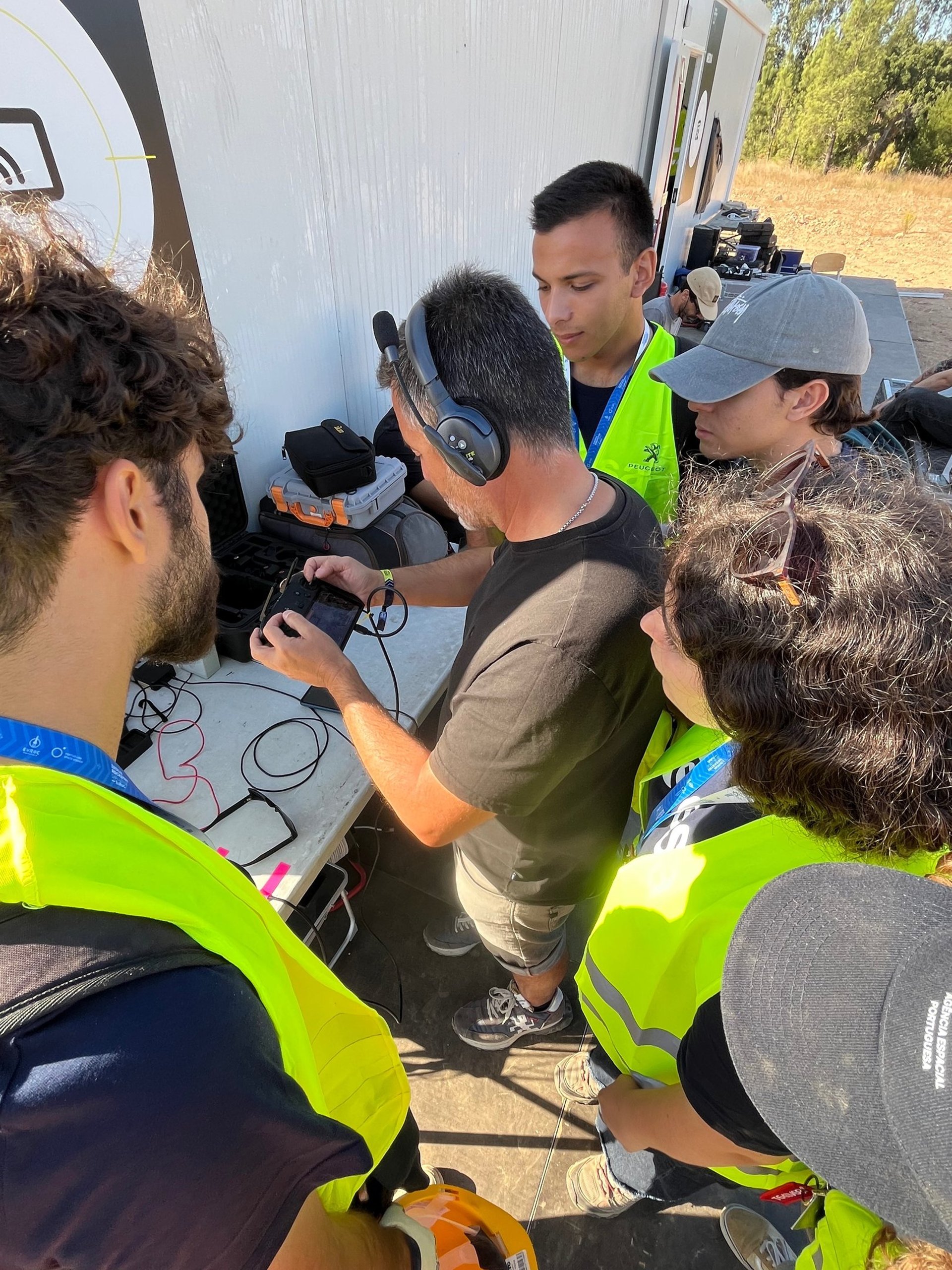
Builds the rocket’s electronic architecture and "brain." This team integrated a dual-redundant flight computer system (ESP32 and CATS VEGA) to control recovery events and manages the telemetry link for real-time data acquisition and tracking.
Teams
Structures
Responsible for the mechanical design and structural integrity of the rocket. This team developed a modular airframe and optimized critical components to ensure the vehicle withstands flight forces while minimizing weight.
Simulations
Dedicated to predicting flight behavior and performance. This team conducts extensive Monte Carlo analyses and CFD simulations to validate aerodynamic stability and trajectory, ensuring the design meets mission safety requirements before manufacturing begins.
Propulsion
Recovery
Focused on the design and manufacturing of the SRAD solid rocket motor. They manage the entire propulsion lifecycle, from fuel grain production to static fire testing, delivering the high thrust-to-weight ratio needed to reach the 3,000-meter target.
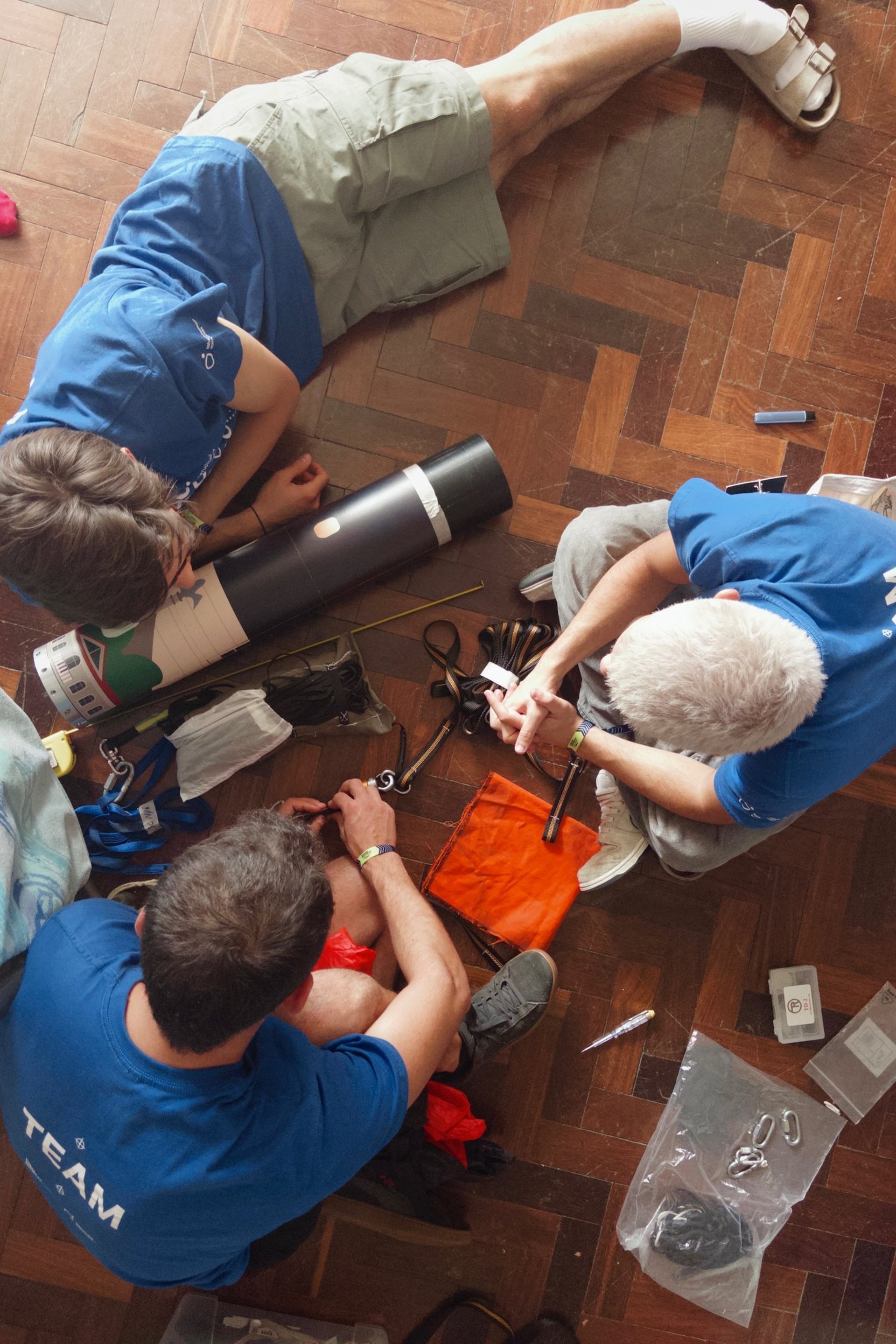
Ensures the safe return of the vehicle using a dual-event parachute system. They implemented an innovative cold-gas CO2 ejection mechanism to deploy the drogue parachute at apogee, followed by a main parachute for a controlled landing.
CONTACT US

© 2025, North Space – Associação de Estudantes para a Exploração Espacial – Todos os direitos reservados.
Climb Your Perspective
Rua de Mouzinho da Silveira 234 6/8,
4050-417, Porto, Portugal